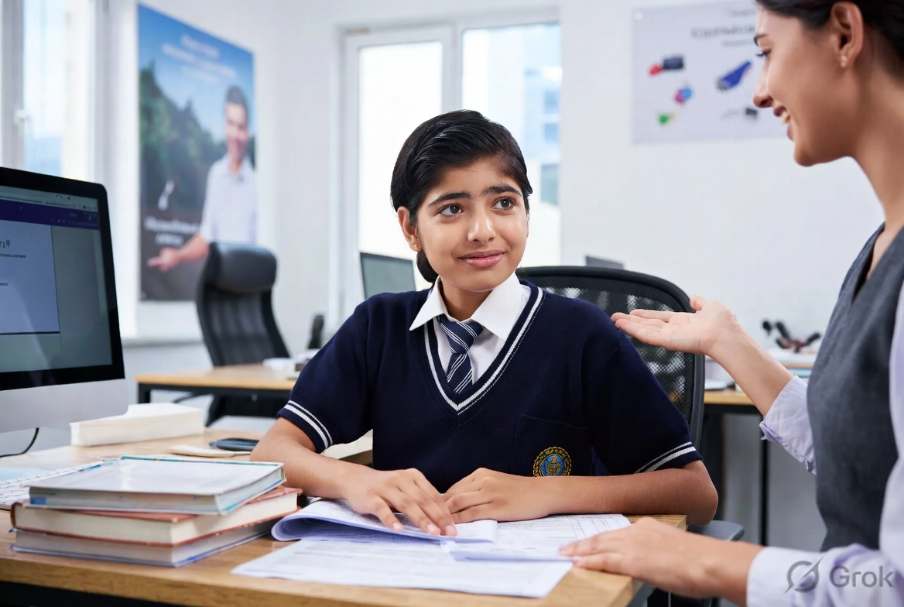
Every year after Madhyamik results are published, thousands of students across West Bengal experience disappointment, stress, and uncertainty because they could not pass the examination. For many students, failing in Madhyamik feels like a major setback that affects confidence, future plans, and family expectations. However, one failed examination does not define a student’s intelligence or future success. In 2026, students have more educational opportunities than ever before to restart and continue their academic journey through flexible learning systems and open schooling options.
Many students believe that failing in Madhyamik means losing an entire year or ending future educational opportunities. This misconception often creates unnecessary fear and emotional pressure. In reality, modern education systems now provide multiple pathways that allow students to continue studying without being permanently affected by one examination result. Open schooling systems such as NIOS, WBROS, and BOSSE have become important educational solutions for students who need a second chance to complete their secondary education.
One of the most important things students should understand after Madhyamik failure is that panic and emotional decisions will not solve the situation. Students should first remain calm and understand that many successful people have experienced academic setbacks before achieving success in life. Educational progress is not always linear, and failure can often become a turning point that motivates students to work harder and make smarter decisions about their future.
Open schooling has emerged as one of the most effective solutions for students who failed Madhyamik examinations. Unlike traditional school systems, open schooling provides flexibility in learning, subject selection, and examination preparation. Students can study at their own pace in a less stressful environment and continue their education through recognized boards without losing valuable years. This flexibility is especially beneficial for students who struggled with academic pressure, health issues, family responsibilities, or lack of proper guidance in regular schools.
NIOS, or the National Institute of Open Schooling, is one of the most recognized open schooling boards in India. It allows students to complete class 10 through flexible learning methods and provides recognized certification accepted for higher studies and career opportunities. Many students who failed in Madhyamik later complete their education successfully through NIOS because the learning system is more adaptable and student-friendly.
WBROS, also known as West Bengal Rabindra Open Schooling, is another important option for students in West Bengal who want to continue their education after failure or school dropout situations. WBROS provides an open learning structure that helps students continue their secondary and higher secondary education through a flexible and supportive academic system. Similarly, BOSSE offers open schooling combined with skill-based education, making it suitable for students who want practical and career-oriented learning pathways.
Students who continue through open schooling can still pursue Higher Secondary education, undergraduate degrees, professional courses, vocational training, and even government job preparation. Open schooling does not limit future opportunities. In fact, many students become more focused and disciplined after academic setbacks because they understand the importance of education more clearly. What matters most is the willingness to continue learning and move forward despite difficulties.
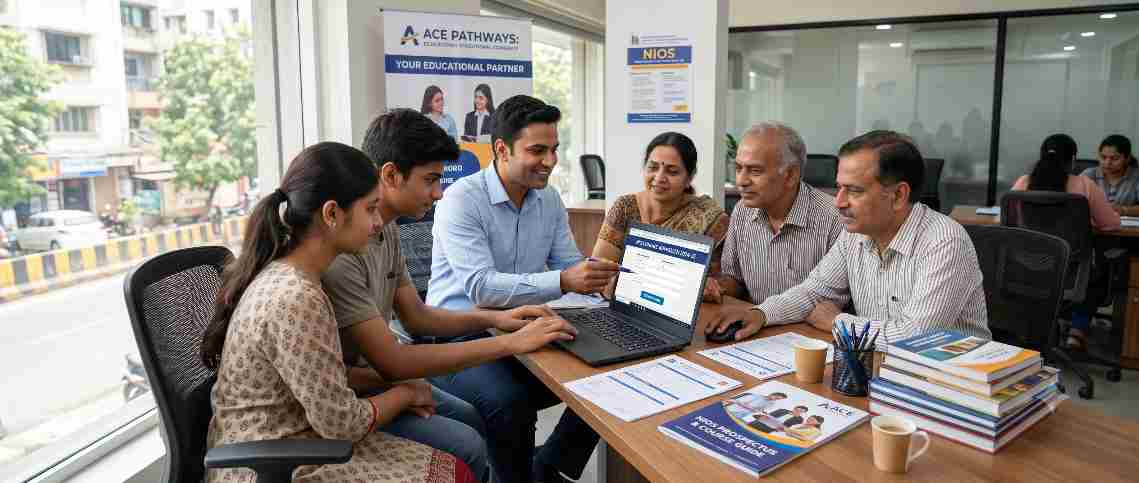
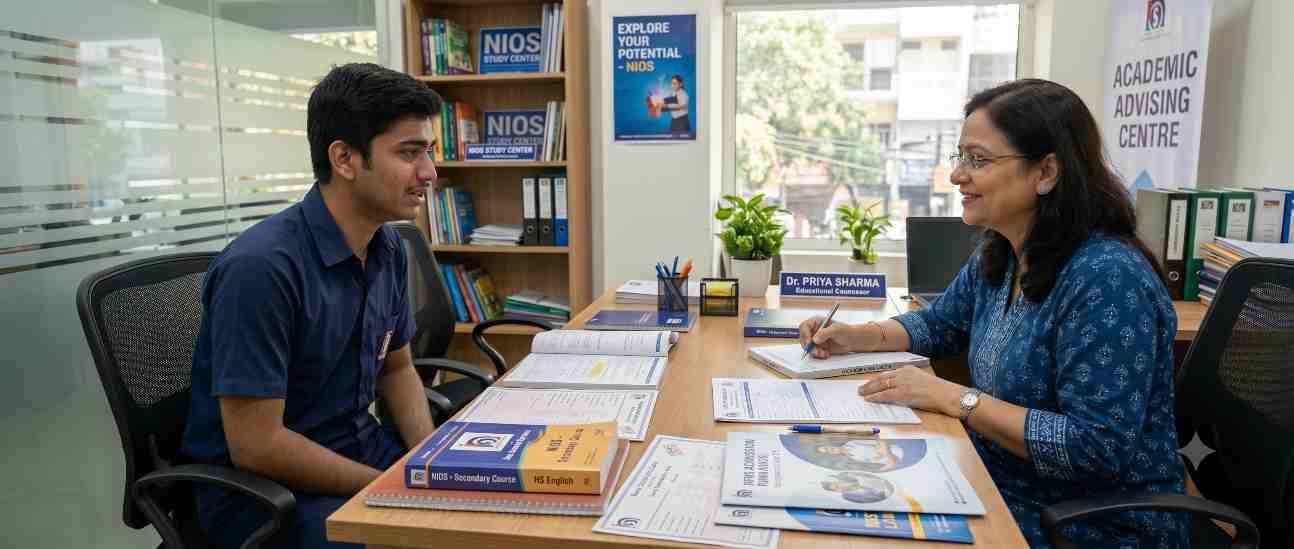
One major reason students struggle after failure is lack of guidance. Many students and parents are not fully aware of the available educational options after Madhyamik failure. Without proper counselling, students often become confused about which board to choose, how to continue studies, or what career paths remain available. This is why educational guidance has become extremely important for students facing academic setbacks.
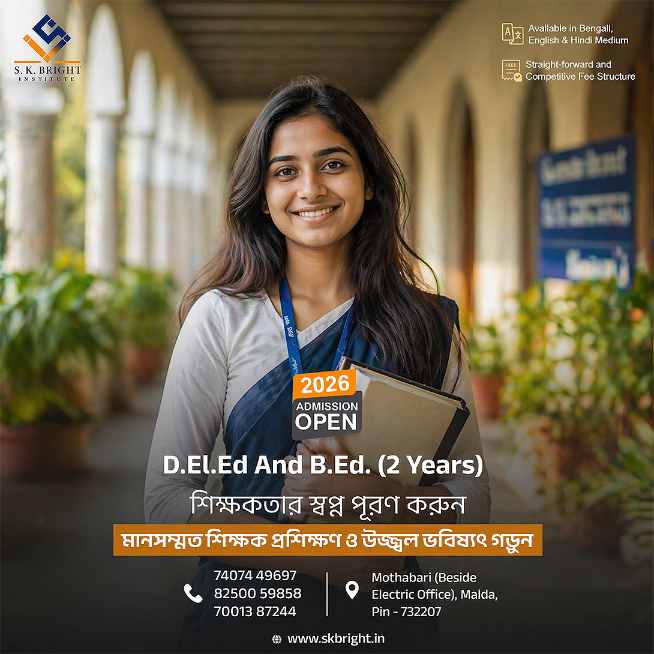
S.K. Bright Institute has established itself as a trusted education consultancy and career guidance center for students who want to continue their education after Madhyamik or Higher Secondary setbacks. Located in Mothabari, Malda, the institute functions as a complete academic and career solution hub where students receive structured support for admissions, course selection, and long-term career planning. The institute focuses on helping students restart, continue, and advance their education through flexible learning systems and recognized academic pathways.
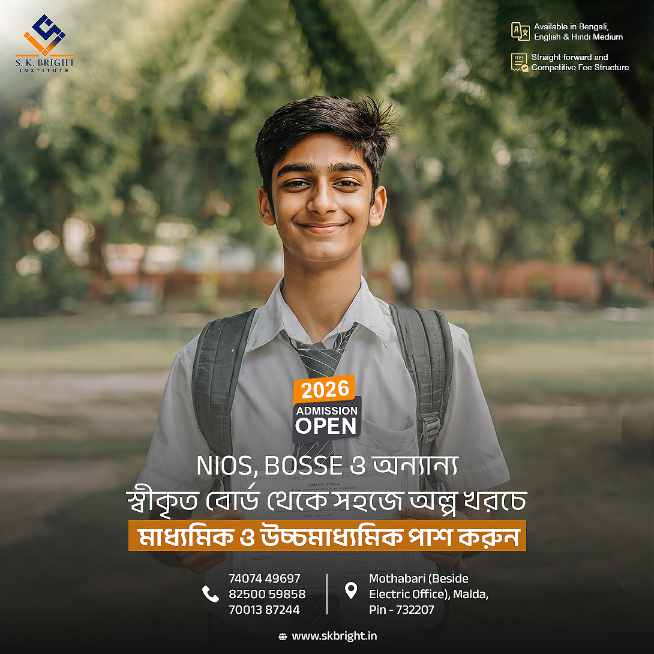
One of the major strengths of S.K. Bright Institute is its support for open schooling programs such as NIOS, WBROS, and BOSSE. Students who failed Madhyamik or dropped out of regular schools can continue their studies through recognized open boards without losing valuable time. The institute provides complete guidance for admissions, subject selection, study planning, and future academic pathways, helping students regain confidence and continue their education smoothly.
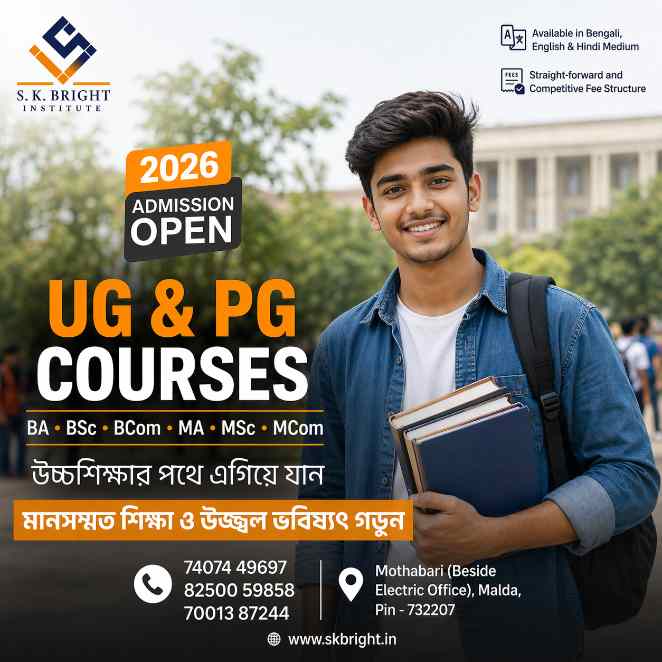
Apart from open schooling, S.K. Bright Institute also supports admissions for undergraduate, postgraduate, and professional programs including BA, BSc, BCom, MBA, MCA, D.El.Ed, B.Ed, Nursing, Law, Pharmacy, and various career-oriented courses. Students can choose between regular, distance, and open learning modes depending on their personal situations and educational goals. Courses are available in Bengali, English, and Hindi, making education more accessible for students from different backgrounds. Affordable fee structures, installment facilities, and scholarship opportunities further ensure that financial limitations do not prevent students from continuing their education.
With more than 8500 students already guided across different educational categories, S.K. Bright Institute has built a strong reputation as a reliable educational support platform in West Bengal. The institute positions itself not merely as a coaching center but as a career-building and academic guidance platform that helps students create stable and successful futures through proper educational direction.
Returning to the importance of overcoming Madhyamik failure, students should remember that one result cannot define their future potential. Academic setbacks are temporary situations that can be overcome with proper support, flexible education systems, and personal determination. Students who continue their studies after failure often become stronger, more disciplined, and more motivated because they understand the value of second opportunities.
Parents also have a major role during this phase. Instead of creating additional pressure or fear, supportive communication and positive encouragement can help students recover emotionally and academically. Students who feel supported by their families and educational mentors are far more likely to regain confidence and continue their studies successfully.
In 2026, education is no longer limited to traditional classroom systems. Flexible learning opportunities, open schooling, and career-focused guidance have created multiple pathways for students to continue their academic journey after setbacks. Madhyamik failure may feel painful in the present moment, but it does not end future possibilities. With proper planning, guidance, and determination, students can rebuild their confidence, continue their education, and move toward long-term success.
DISCLAIMER
"S.K. Bright Institute operates as an independent education consultancy and admission guidance center. It provides guidance and support for admissions into various recognized boards and universities. The institute itself is not a university or board but assists students in the admission and career planning process."