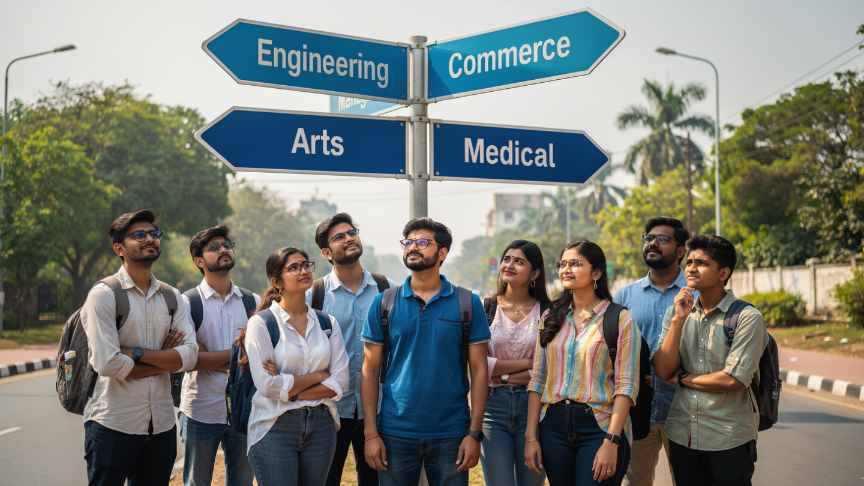

Every year, thousands of students across India complete their Higher Secondary education and begin exploring career options that offer professional growth, social respect, and long-term stability. Among these professions, law continues to attract students because it combines knowledge, advocacy, public service, and career opportunities across multiple sectors. One of the most common questions asked by students and parents is how to become a lawyer after 12th in India. The answer is straightforward, but understanding the complete process helps students make informed decisions about their future.
The legal profession has changed significantly over the years. Modern lawyers are no longer limited to courtrooms and litigation. Today, law graduates work in corporate companies, multinational organizations, legal consultancies, government departments, startups, educational institutions, and even the media industry. As India's economy and legal system continue to grow, the demand for qualified legal professionals is also increasing. This makes law one of the most promising professional careers for students after Higher Secondary.
For students who want to become lawyers immediately after class 12, the most popular pathway is admission to a BA LLB program. BA LLB is an integrated law degree that combines a bachelor's degree with legal education. Instead of completing graduation first and then studying law separately, students can directly begin their legal education after Higher Secondary through a five-year integrated course. This route has become increasingly popular because it saves time and provides early exposure to legal subjects.
Students from Arts, Science, and Commerce backgrounds can generally pursue BA LLB after completing Higher Secondary from a recognized board. Many students mistakenly believe that law is only suitable for Arts students. In reality, legal education welcomes learners from all academic backgrounds because the profession requires analytical thinking, communication skills, reasoning ability, and problem-solving capabilities rather than expertise in one specific school subject.
When selecting a law course, students should focus on understanding the nature of legal education rather than only looking at the course title. During BA LLB studies, students learn about constitutional law, criminal law, civil law, contract law, family law, corporate law, legal ethics, and judicial procedures. These subjects help students understand how laws function within society and how legal professionals contribute to justice and governance.
One reason law continues to remain attractive is the diversity of career opportunities available after graduation. Some graduates choose litigation and courtroom practice. Others move into corporate legal departments, compliance management, intellectual property consulting, taxation, arbitration, public policy, or legal research. Government opportunities are also available through judicial services examinations, public sector organizations, and various administrative positions. This diversity allows students to build careers that match their interests and strengths.
Another important aspect of becoming a lawyer is developing strong communication skills. Legal professionals spend significant time researching, analyzing information, drafting documents, and presenting arguments. Students who enjoy reading, writing, debating, and critical thinking often find law an intellectually rewarding profession. However, success in law depends more on consistency, discipline, and continuous learning than on natural talent alone.
Parents often ask whether law remains a good career option in today's competitive environment. The answer depends largely on the student's dedication and willingness to build expertise. The legal profession continues to evolve as technology, business regulations, digital transactions, and international trade create new legal challenges. This evolution generates demand for professionals who understand modern legal frameworks and can provide practical solutions.
For students considering legal education after Higher Secondary, proper guidance during admission becomes important. Many students remain confused about eligibility, course selection, universities, and career pathways. Choosing the right institution and understanding future opportunities can make a significant difference in academic and professional development.
S.K. Bright Institute has been helping students explore professional education opportunities across multiple fields, including law programs such as BA LLB, LLB, and LLM. Located in Mothabari, Malda, the institute provides structured admission guidance, educational counselling, and career planning support for students seeking higher education opportunities. Students receive assistance in understanding course options, admission procedures, eligibility requirements, and future career pathways, helping them make informed academic decisions.
Beyond legal education, S.K. Bright Institute supports admissions for undergraduate, postgraduate, teacher training, management, and distance education programs. With experience in guiding more than 8500 students across various educational streams, the institute continues to help learners build strong academic foundations and pursue professional careers through structured educational support and counselling.
Students should also remember that becoming a lawyer is not only about obtaining a degree. The profession requires commitment to learning, ethical responsibility, and continuous professional development. Successful lawyers spend years building expertise, understanding legal systems, and developing practical skills that allow them to serve clients effectively. Those who remain dedicated to the profession often find law both intellectually satisfying and professionally rewarding.
In 2026, legal education continues to be one of the most respected and career-oriented choices available after Higher Secondary. Students who are interested in justice, governance, public service, business regulations, or legal advocacy can find meaningful opportunities through law programs. By understanding the admission process, selecting the right educational pathway, and developing strong professional skills, students can confidently begin their journey toward becoming successful legal professionals in India.
DISCLAIMER
"S.K. Bright Institute operates as an independent education consultancy and admission guidance center. It provides guidance and support for admissions into various recognized boards and universities. The institute itself is not a university or board but assists students in the admission and career planning process."